How fractional RF rebuilds skin from within.
Radiofrequency has been studied on skin for more than two decades. This page explains, in plain language, what happens under the surface when RF heat reaches the dermis, and what the published research on clinic RF, the technology the R1 is built on, actually found.
- 100–400 µmWhere clinic RF heat acts, below the epidermis
- +75.8%Newly made collagen, 3 months after treatment
- 90–95%Volunteer satisfaction at 3 months
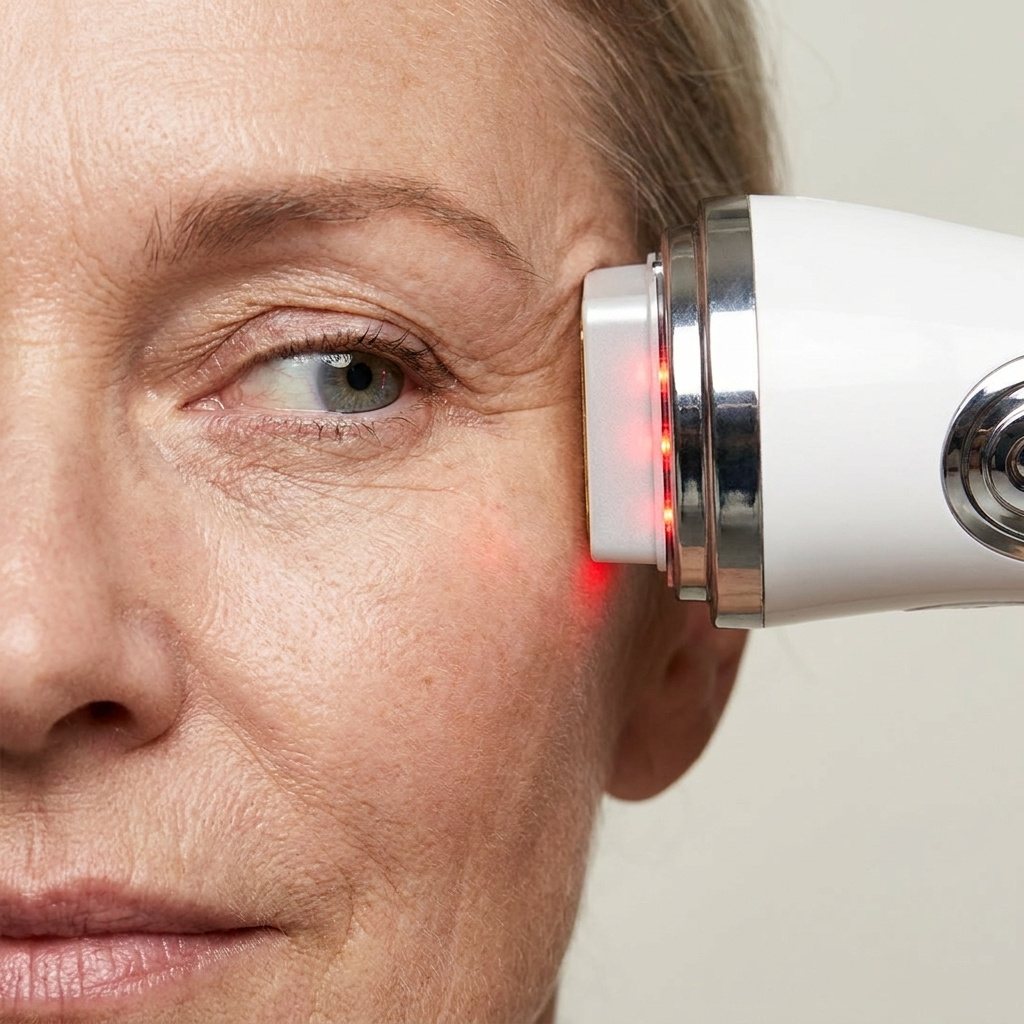
What is radiofrequency energy?
RF is a form of electromagnetic energy, usually in the range of about 0.3 to 10 MHz. The R1 runs at 1.5 MHz. Laser light travels as a beam and can be absorbed by pigment on the way in. RF travels as an alternating current through tissue instead.
Skin resists that current, and the resistance turns into gentle heat. That heat builds below the surface, in the dermis, where collagen fibres live.
Epidermal melanin doesn't reduce RF energy, which is why researchers describe it as appropriate for any skin type, a real advantage over many light-based treatments.
- Frequency
- 0.3–10 MHz (R1: 1.5 MHz)
- Skin tone
- Not reduced by melanin
- Skin surface
- Stays intact, non-ablative
- Downtime
- None to minimal
- What it does
- Heat-driven collagen remodelling
Why the dermis is the target.
Skin has three main layers. The epidermis is a thin protective barrier. Below it, the dermis is packed with the collagen and elastin that keep skin firm. Deeper still, the hypodermis holds fat and connective tissue.
From early adulthood, skin loses about 1% of its collagen a year, and up to 30% can go in the first five years after menopause. Fibres get thinner and looser, and that shows up as laxity and lines.
In published clinic RF research, the heat effect sat 100 to 400 micrometres below the epidermis, right in the zone where collagen is densest. That's the layer creams can't reach.
- Stratum corneumThe outermost layer of dead cells.
- EpidermisLiving skin cells, melanin and the barrier.
- Papillary dermisRF target zoneThe upper dermis: fine collagen and capillaries.
- Reticular dermisRF target zoneDense type I and III collagen, and elastin.
- HypodermisFat and deeper connective tissue.
Three phases of skin renewal.
RF sets off a staged response in the skin. Each phase builds on the last, which is why results keep improving for months.
- 01During a sessionCollagen contracts
Controlled warmth makes existing collagen fibres contract and shorten. That's the firmer feel you notice right after a session.
- 02Days 1 to 14Fibroblasts wake up
The warmth signals the skin to repair. Growth factors such as TGF-β call in fibroblasts, the cells that make collagen, with no wound at the surface.
- 03Weeks 4 to 12New collagen is laid down
Fibroblasts deposit new type I and type III collagen into the dermis, in a tighter, more organised structure. This is the slow part, and the part that lasts.
Three months after six clinic RF sessions, skin biopsies in the El-Domyati study showed type I collagen up from 65.8% to 81.2%, type III up from 60.9% to 73.6%, and newly made collagen up from 15.3% to 26.9%.
Why fractional RF.
Not all RF is delivered the same way. A flat single-plate device heats everything under the plate. The R1 delivers energy through 144 raised points, so it treats a fraction of the skin at a time and leaves the skin between those points untouched.
That untouched skin acts as a reservoir of healthy cells around each treated point, which helps recovery. Each point can get a concentrated collagen signal without heating the whole surface.
Dark dots are treated points. The skin around them stays untouched.
What ageing does to your collagen.
Collagen is the structural protein that gives skin firmness and bounce. Understanding how it changes with age explains why stimulating it matters more than coating the surface.
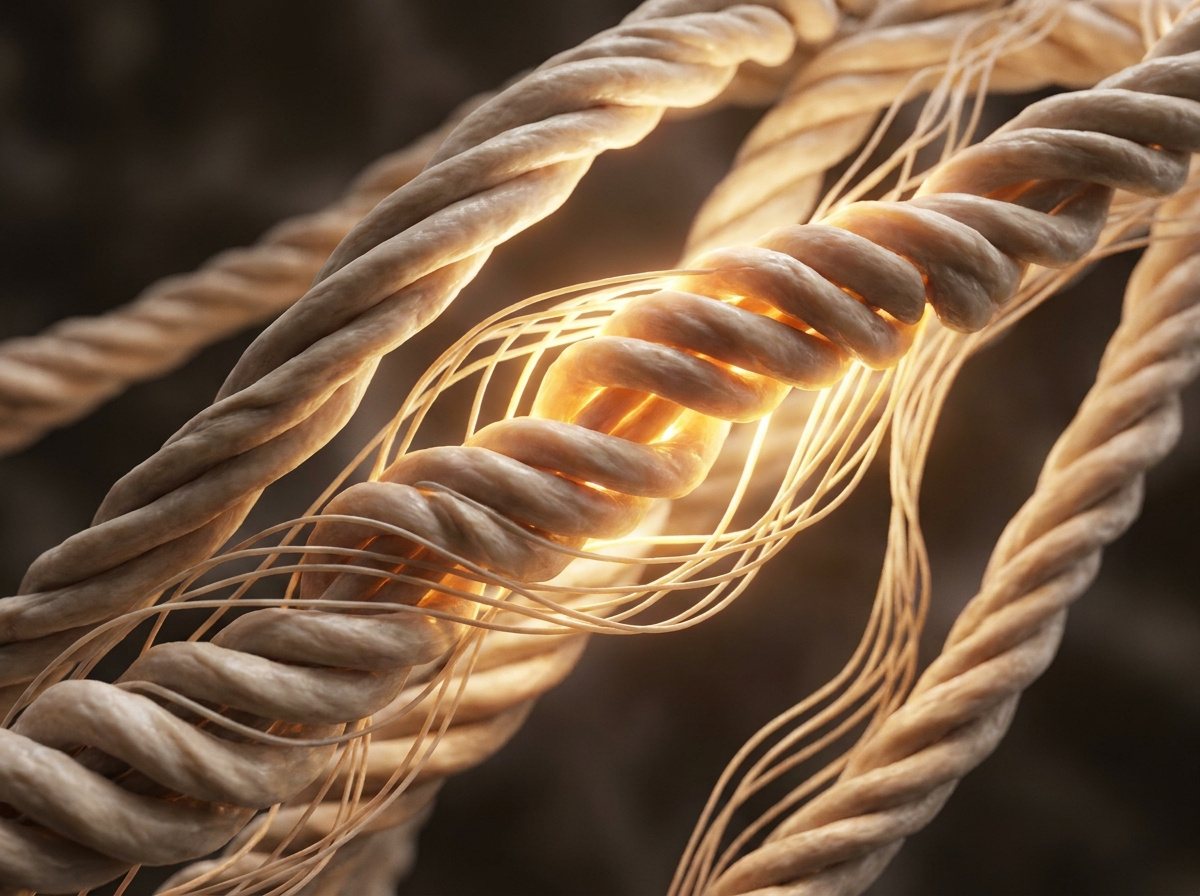
What happens after you put it down.
- During the sessionImmediate contraction. Warmth makes existing fibres contract. Skin feels firmer straight away.
- Days 1 to 3Signalling. Mild warmth or pinkness can show as the skin starts its repair response.
- Days 7 to 14Fibroblast activation. New collagen synthesis begins, starting with flexible type III.
- Weeks 4 to 8Maturation. Collagen matures and organises. Skin feels firmer and more structured.
- Months 2 to 3+Peak remodelling. Collagen is at its densest and most organised, and results are easiest to see.
What the research shows.
El-Domyati and colleagues followed six women aged 47 to 62 through six monopolar clinic RF sessions, two weeks apart, with photographs and skin biopsies before, at the end of treatment and three months later.
The takeaway: every measure kept improving after the last session, because collagen remodelling is gradual. That's why the R1 routine runs for 8 weeks and more, not one session.
How RF compares to other options.
Every treatment has trade-offs. Here's how fractional RF sits next to the common alternatives.
Swipe to see the full table →
| Treatment | Reaches the dermis | All skin tones | Downtime | At home |
|---|---|---|---|---|
| Fractional RF (R1) | Yes | Yes | None | Yes |
| Ablative laser | Yes | Pigment risk | 7–14 days | Clinic only |
| Non-ablative laser | Partly | Pigment risk | Minimal | Clinic only |
| Topical retinoids | Indirectly | Yes | Possible irritation | Yes |
| Microcurrent | No, acts on muscle | Yes | None | Yes |
| Injectable fillers | Adds volume | Yes | 1–3 days | Clinic only |
Designed for every skin tone.
Lasers and IPL rely on pigment to absorb their energy, which can heat melanin in deeper skin tones. RF heats according to how tissue resists electrical current, not the colour of the skin above it.
Before you start: begin on L and follow the how-to guide. If you have a pacemaker or other implanted device, metal implants in the area, are pregnant, or have an active skin condition, ask a healthcare professional before use.
RF heats the dermis without removing the epidermis. No open wound and no ablation.
In the El-Domyati study, one of six volunteers had slight redness and mild temporary darkening that cleared within 5 days. No scarring was seen.
You can go straight back to your day. Some warmth or pinkness for a few hours is normal.
The science is clear. Now try it on your own skin.
Fractional RF in your hands, with no clinic appointments, and 90 days to send it back if it isn't for you.
Shop the R1 →- El-Domyati M, El-Ammawi TS, Medhat W, et al. Radiofrequency facial rejuvenation: evidence-based effect. J Am Acad Dermatol. 2011;64(3):524–535.
- Calleja-Agius J, Muscat-Baron Y, Brincat MP. Skin ageing. Menopause Int. 2007.
- Shuster S, Black MM, McVitie E. The influence of age and sex on skin thickness, skin collagen and density. Br J Dermatol. 1975;93(6):639–643.